
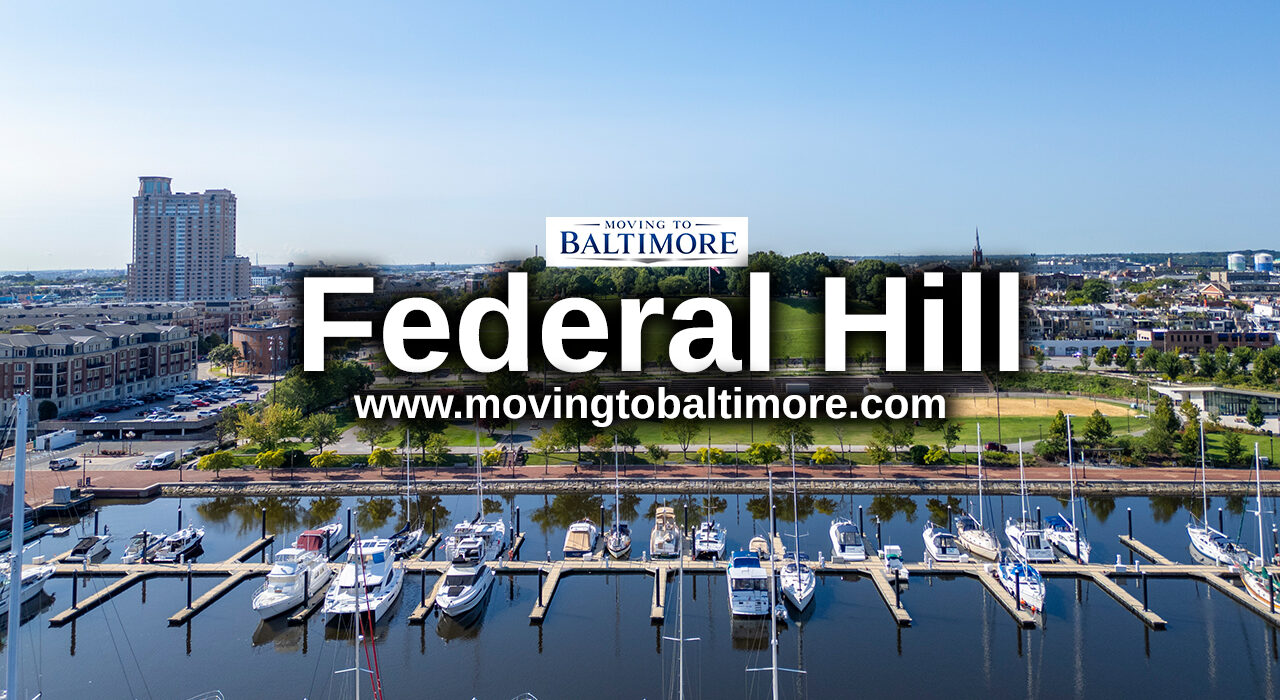
Stand at the top of Federal Hill Park on a clear evening and look north. The entire Baltimore skyline stretches out in front of you, the Inner Harbor glittering below, Camden Yards lit up to the west. It’s one of the most iconic views in the city — and it’s what residents of this neighborhood get to enjoy any time they want, just by walking to the end of their block.
Federal Hill is one of Baltimore’s most sought-after neighborhoods, and for good reason. It combines genuine urban energy, historic architecture, walkable convenience, and that rare quality that’s hard to manufacture: a real sense of place. People who move here tend to stay, and people who leave tend to come back.
A Neighborhood With Real History
Federal Hill’s story starts long before the restaurants and rooftop bars. The hill itself served as a lookout point during the War of 1812, a fortified battery protecting Baltimore’s harbor from British naval attack. In the 19th century, the surrounding streets became home to working-class families employed in the shipyards and factories along the Patapsco River waterfront.
By the late 1970s, Federal Hill had fallen on hard times — a pattern familiar to many American urban neighborhoods of that era. What happened next is part of Baltimore lore: a wave of young professionals, drawn by cheap rowhouses and proximity to downtown, began buying and rehabilitating the historic housing stock. The neighborhood reinvented itself through the 1980s and 1990s and never looked back. Today, two separate sections of Federal Hill are listed on the National Register of Historic Places, protecting the architectural character that makes it so visually distinctive.
What Living Here Actually Looks Like
Federal Hill is dense, walkable, and genuinely urban — you’re a mile south of downtown Baltimore, which means everything is close and the energy reflects that. The housing stock is almost entirely rowhouses, ranging from pre-1940s Federal and Greek Revival brick homes to newer townhomes built on former industrial sites along the waterfront edge. Owner-occupied homes slightly outnumber rentals, giving the neighborhood a more stable, invested-resident character than many comparable urban neighborhoods.
The primary commercial corridor runs through Cross Street Market and along South Charles Street — an eclectic mix of restaurants, bars, boutique shops, and neighborhood staples. Cross Street Market itself is a neighborhood institution: a covered market hall with vendor stalls, a Sunday farmers market, and frequent live events that draw the whole community together.
Food, Nightlife and Community
Federal Hill has one of the most active food and nightlife scenes in Baltimore — comparable to Fells Point in energy but with a slightly different character. Where Fells Point feels historic and waterfront-focused, Federal Hill feels neighborhood-focused and hilltop-casual. The bars along Cross Street and Light Street draw a regular crowd of young professionals and established residents alike.
The American Visionary Art Museum, located on the neighborhood’s northern edge, is one of Baltimore’s genuine cultural gems — a world-class museum of self-taught art that draws visitors from across the country. The Maryland Science Center sits nearby along the Inner Harbor waterfront. Federal Hill Park hosts Shakespeare on the Hill performances every summer, a beloved community tradition that fills the park with residents on warm evenings.
Getting Around
Federal Hill is exceptionally well-positioned for commuters. Downtown Baltimore is a mile north — walkable, bikeable, or a short bus ride via the CityLink Silver line along Charles Street. Camden Yards, home of the Baltimore Orioles and a stop on the MARC Penn Line to Washington D.C., is within easy walking distance — making Federal Hill a legitimate option for remote workers who occasionally need to be in the capital without paying D.C. prices to live there.
The Federal Hill Ferry Terminal connects residents to the Baltimore Water Taxi network, offering scenic harbor crossings to Fells Point, Harbor East, and other waterfront neighborhoods. Baltimore/Washington International Airport is approximately 9 miles south via Maryland Route 295.
Dedicated bike lanes run through the neighborhood, and the waterfront promenade extends along Key Highway for cyclists and runners. Walk Score consistently rates Federal Hill among Baltimore’s most walkable neighborhoods.
Who Federal Hill Is Right For
Federal Hill draws young professionals, couples, and established urban residents who want the energy of city living without sacrificing neighborhood character. The household income skews higher than the Baltimore average, reflecting the neighborhood’s appeal to career-stage buyers who are relocating for work at downtown employers, the University of Maryland Medical System, or the growing professional services sector.
For buyers coming from Washington D.C. or Northern Virginia, Federal Hill often reads as the Baltimore equivalent of neighborhoods like Capitol Hill or Old Town Alexandria — historic, walkable, genuinely urban, and significantly more affordable per square foot than anything comparable in the D.C. metro area.
If you want sweeping harbor views, a front-row seat to Baltimore’s best food scene, and a neighborhood that takes its history seriously without being frozen in it — Federal Hill is worth a very close look.
Ready to explore what’s currently available? Browse active Federal Hill listings below, or get in touch and we’ll help you find your place on the hill.